IMPROVING ACTIVITIES FOR 9TH GRADERS
liveworksheets.com
Past Simple /Regular And Irregular Verbs

LISTEN, PRACTICE AND SEND BY CLASSROOM !
REGULAR VERBS
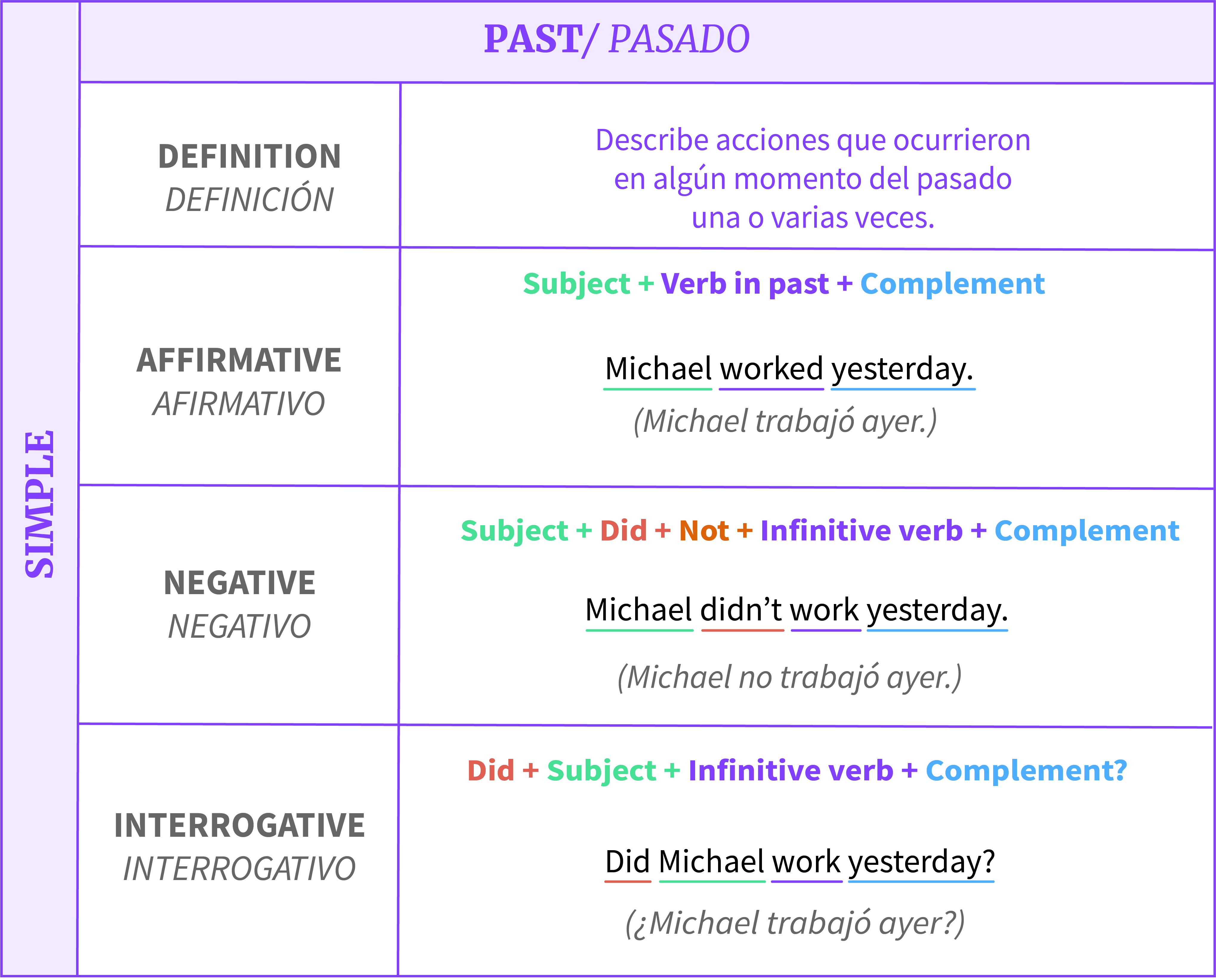
Estos son verbos como "walk" (andar), "talk" (hablar), "rate" (categorizar), "raise" (levantar), "hate" (odiar), "help" (ayudar), "like" (gustar), "want" (querer), "raid" (asaltar, redar), "last" (durar), "gore" (cornear), "wash" (lavar), "ask" (preguntar), "work" (trabajar), "show" (mostrar), "use" (usar), "look" (mirar a un objeto fijo), "watch" (mirar a una actividad en progreso), "listen" (escuchar), etc. Para hacer el "pasado simple" de estos verbos, simplemente hay que añadir la terminación "ed" a su infinitivo.
Listen the following list of regular verbs and make sentences with 6 of them
Por ejemplo, el pasado simple de (Voz de: Christopher Wright) "walk" es "walked", "talk" = "talked", "rate" = "rated", "raise" = "raised", "hate" = hated", "help" = "helped", "like" = "liked", "want" = "wanted", "last" = "lasted", "gore" = "gored", "wash" = "washed", "ask" = "asked", "work" = "worked", "show" = "showed", "use" = "used", "look" = "looked", "watch" = "watched", "listen" = "listened", "interview" = "interviewed", "play" = "played", "beg" = "begged", "move" = "moved", "push" = "pushed", "present" = "presented", etc.
IRREGULAR VERBS
Now, listen the following list of irregular verbs and make sentences with 6 of them
Con los verbos irregulares ya no es cuestión de añadir simplemente una terminación (como "ed" en el pasado simple). El verbo puede cambiar completamente de forma y no queda más remedio que memorizarlo. (¡Menos mal que tampoco hay tantas!) Entre los verbos irregulares hay verbos como: "find" (encontrar), "get" (coger), "give" (dar), "come" (venir), "go" (ir), "have" (tener), "know" (saber), "put" (poner), "read" (leer), "say" (decir), "see" (ver), "write" (escirbir), "take" (llevar), "think" (pensar), "make" (hacer), "do" (hacer), etc.
Por ejemplo, el pasado simple de "find" es "found", "get" = "got", "give" = "gave", "come" = "came", "go" = "went", "have" = "had", "know" = "knew", "put" = "put", "read" = "read", "say" = "said", "see" = "saw", "write" = "wrote", "take" = "took", "think" = "thought", "make" = "made", "do" = "did", etc.
WAS - WERE
(Past of To Be)
I was born in Córdoba in 1985
My best friend was not (wasn´t) at school last week.
Were they boring yesterday ?
Let's watch a video!!
liveworksheets.com
 |
| Video About Comparatives |

When you have finished, click on "FINISH" and "CHECK MY ANSWERS"
liveworksheets.com

No hay comentarios:
Publicar un comentario